


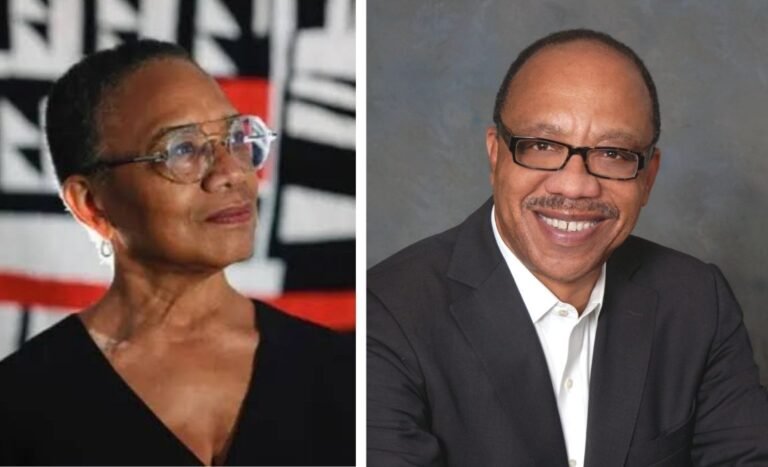
Avis C. Robinson was an American artist, environmental worker, educator, and advocate. Her full name was Avis Collins Robinson. She is remembered for her bold paintings and abstract quilts. Her work told stories about Black history, family strength, race, memory, and survival. Many people also know her as the wife of Eugene Robinson, the Pulitzer Prize-winning journalist and former Washington Post columnist. But avis c. robinson had her own powerful life story. She was not only connected to a famous husband. She built a name through art, service, learning, and care for young people. She died on October 28, 2023, at age 70, but her work still speaks in 2026.
Quick Bio
| Field | Details |
|---|---|
| Full Name | Avis Collins Robinson |
| Popular Name | Avis C. Robinson |
| Date of Birth | July 26, 1953 |
| Date of Death | October 28, 2023 |
| Age at Death | 70 years old |
| Birthplace | Baltimore, Maryland, United States |
| Nationality | American |
| Ethnicity | Black / African American heritage |
| Known For | Art, quilts, paintings, education work, environmental advocacy |
| Profession | Artist, former EPA employee, nonprofit founder |
| Husband | Eugene Robinson |
| Children | Aaron Robinson and Lowell Robinson |
| Legacy | Art, education access, Black history, environmental work |
Early Life and Family Roots
Avis Collins Robinson was born on July 26, 1953, in Baltimore, Maryland. Public obituary records name her parents as Annie Ruth Brown Collins and Edward Rhodes Collins. She grew up during a time when many Black families in America were still fighting for fair schools, equal work, and full civil rights. This background matters because her later art often looked back at family roots, race, and history. Her work did not treat the past like something far away. It made the past feel close, living, and important. In simple words, avis c. robinson used her life experience to understand the lives of people who came before her.
Education and Strong Mind
Education was a major part of her life. Public records state that she graduated from the Academy of the Holy Cross in 1971 and received a bachelor’s degree from the University of Maryland in 1974. Later public profiles also describe her as a Harvard-educated economist. This shows that she was not only creative but also deeply trained in serious study. Her path was different from many artists because she did not begin as a full-time painter. She first worked in policy, science, and public service. That made her art special. She understood numbers, systems, history, and human struggle. This wide view helped avis c. robinson create work with deep meaning.
Work at the EPA and Environmental Justice
Before becoming widely known as an artist, Avis C. Robinson worked with the Environmental Protection Agency. Claflin University described her as a former deputy director of the Office of Atmospheric Programs at the EPA. That role connects her to climate, air quality, and public health issues. She cared about the environment before climate justice became a common phrase online. Her background helps explain why people call her an environmentalist. She understood that clean air, safe land, and healthy communities were not just science topics. They were human topics. Poor and minority communities often face more pollution. Her work life shows that avis c. robinson cared about both policy and people.
Her Art Style and Main Message
Avis C. Robinson became best known for paintings and abstract quilts. The U.S. Department of State says her work explored race, gender, oppression, and history. Her art also showed the richness of African American life and the idea of “soul.” The Foundation for Art and Preservation in Embassies also describes her work as art that looked at lost history, ancestors, famous Black leaders, and ordinary people with courage. This is why her art feels personal and public at the same time. It was not just decoration. It was storytelling. avis c. robinson used fabric, color, faces, and symbols to ask viewers to remember people who were often ignored.
Paintings, Quilts, and Black History
Her quilts were not simple home objects. They were memory pieces. In many Black families, quilts have long carried stories, love, labor, and survival. Avis C. Robinson used that tradition in a fresh way. Her abstract quilts could show pain, hope, movement, and identity. Her paintings also honored workers, families, and leaders. Claflin University reported that one of her paintings, Alonzo Smith, Foreman, Black Mason Building Claflin, was based on a historic family and campus image. This painting honored Black labor and family history connected to Eugene Robinson’s roots in Orangeburg, South Carolina. Her art made everyday workers look important, proud, and seen.
Marriage to Eugene Robinson
Avis C. Robinson married Eugene Robinson on September 23, 1978, according to public biographical records. Their marriage lasted more than 45 years. Eugene Robinson became known as a major voice in American journalism. He worked at The Washington Post for decades and won the 2009 Pulitzer Prize for Commentary. He wrote about politics, race, culture, and American life. Avis and Eugene shared a world of ideas, history, and public service. But her life should not be reduced to being his wife. Their story is best understood as a partnership between two thinkers. He used words. She used images, fabric, and paint.
Family Life and Private Strength
Avis C. Robinson and Eugene Robinson had two sons, Aaron and Lowell. Public obituary information also says she was survived by grandchildren, a daughter-in-law, a sister, foster brothers, nieces, and nephews. This gives readers a fuller picture of her life. She was an artist and advocate, but she was also a mother, grandmother, sister, and family member. She lived in public circles but kept many personal details private. That privacy should be respected. In 2026, there is no need to invent extra details about her private life. The known facts are already strong. avis c. robinson left a family legacy built on love, learning, and service.
Washington Metropolitan Scholars
One of her most meaningful achievements was founding Washington Metropolitan Scholars. Public obituary records say she left the EPA in 2003 to focus on this nonprofit. The group worked to connect leading universities with low-income, high-achieving minority students in the Washington, D.C., area. This is an important part of her biography because it shows her belief in opportunity. She knew talent was everywhere, but access was not equal. Her work helped students become visible to top colleges. This mission matched her wider life message. She wanted young people to be seen, heard, and supported. avis c. robinson used her knowledge to open doors for others.
Key Things to Know About Her Legacy
- Avis C. Robinson was not only an artist. She was also a policy worker, education advocate, nonprofit founder, wife, mother, and storyteller who used many parts of her life to serve others.
- Her art focused on Black life, hidden history, family roots, struggle, courage, and the long fight for dignity in America.
- Her work with Washington Metropolitan Scholars showed that she believed education could change a young person’s future, especially when gifted students lacked money, access, or support.
- Her life reminds readers that legacy can be made through quiet service, strong ideas, and creative work that keeps history alive.
Public Recognition and Important Works
Avis C. Robinson’s work reached respected public spaces. Claflin University reported that one of her portraits was donated by Eugene and Avis Robinson and displayed in connection with the school’s history. The same report noted that her commissioned portrait of Abraham Lincoln, made with antique quilts, broadcloth, and acrylic paint, had been displayed in Ford’s Theatre after its reopening for Lincoln’s bicentennial. This detail is important because it shows how her work moved between family memory and national memory. She could take fabric and paint and connect them to American history. avis c. robinson made art that belonged in serious public conversations.
Her Final Creative Season
One newly important detail for 2026 readers is her final known art project. Public obituary information says that, at the time of her death, Avis C. Robinson was completing a project for The Washington Post using quilted fabric pieces and essays about the four seasons. The Washington Post later described her Winter quilt as her final artwork. This makes her last project deeply moving. Seasons often stand for change, age, memory, endings, and renewal. Her final work seems to fit the larger meaning of her life. Even near the end, she was still creating. avis c. robinson kept using art to explain time, beauty, and history.
Why People Still Search for Avis C. Robinson in 2026
People still search for avis c. robinson because her story touches many subjects at once. Some readers want to know about Eugene Robinson’s wife. Some want to learn about Black women artists. Others are interested in quilts, social justice, climate work, or education programs. In 2026, Eugene Robinson’s public profile also remains active because his book Freedom Lost, Freedom Won was published by Simon & Schuster on February 3, 2026. The publisher describes the book as a personal history of America told through his family story. That wider interest in Robinson family history can also bring new attention to Avis and her art.
Final Thoughts
Avis C. Robinson lived a full and meaningful life. She worked in environmental policy. She helped students reach better chances. She created art that honored Black history, ancestors, workers, and family memory. She was connected to Eugene Robinson, but she also stood strongly on her own. Her quilts and paintings showed that art can teach, heal, and remember. Her education work showed that service can change futures. Her final creative project showed that she kept making meaning until the end. In 2026, avis c. robinson remains a powerful example of a woman whose legacy was built with color, care, courage, and purpose.
FAQs
1. Who was Avis C. Robinson?
Avis C. Robinson, also known as Avis Collins Robinson, was an American artist, environmental worker, nonprofit founder, and advocate. She was known for paintings and quilts that explored Black history, race, family memory, and social justice. She was also the wife of journalist Eugene Robinson.
2. What was Avis C. Robinson famous for?
Avis C. Robinson was famous for her paintings and abstract quilts. Her art often focused on African American life, hidden history, ancestors, workers, and important public figures. She also became known for her education work through Washington Metropolitan Scholars.
3. Was Avis C. Robinson married to Eugene Robinson?
Yes. Avis C. Robinson was married to Eugene Robinson. Public records say they married in 1978. Eugene Robinson is a Pulitzer Prize-winning journalist and former Washington Post columnist.
4. When did Avis C. Robinson die?
Avis C. Robinson died on October 28, 2023. She was 70 years old. Her death was widely noted in public obituary records and tributes.
5. Did Avis C. Robinson work in the environment field?
Yes. Avis C. Robinson worked at the Environmental Protection Agency. Public reports describe her as a former deputy director of the Office of Atmospheric Programs. This role connects her to climate and environmental policy work.
6. What was Washington Metropolitan Scholars?
Washington Metropolitan Scholars was a nonprofit founded by Avis C. Robinson. It helped low-income, high-achieving minority students in the Washington, D.C., area connect with leading universities. It was one of her major service projects.
7. Why is Avis C. Robinson’s legacy important?
Her legacy is important because she joined art, history, education, and justice. She used paintings and quilts to tell stories that many people forgot or ignored. She also helped young students find better chances through education.
